Changes

Rev. Dr. Kate Winters

It is a lovely spring day here on the midcoast. The air is cool, the sun bright, and the bugs have yet to show up. At least, most of them. So I grabbed my coffee, my journal, and my hunter green wide-brimmed hat I bought last year for our “Camp Sunday” in church and went out to our back deck. I spent a little time watching Joel clearing out some brush in front of our woods. He wants to be able to see deeper into the trees, always on the lookout for the wildlife he loves.

I sat down at the round glass table I use as a desk outside. Upon opening my journal, I happened to glance back at the house. I was taken aback. What did I see but an aged woman in a plaid flannel shirt, baggy jeans, and a hat pulled down over her face in the door window. A bit shocked, I asked myself when did I turn into an old Mainer?

I flashed back to our trip out here nearly twenty years ago, sitting at an Italian restaurant talking about our new life adventure. I remember clearly that I had my long hair tied up in a ponytail and was full of youthful energy and excitement. We were moving to Maine!

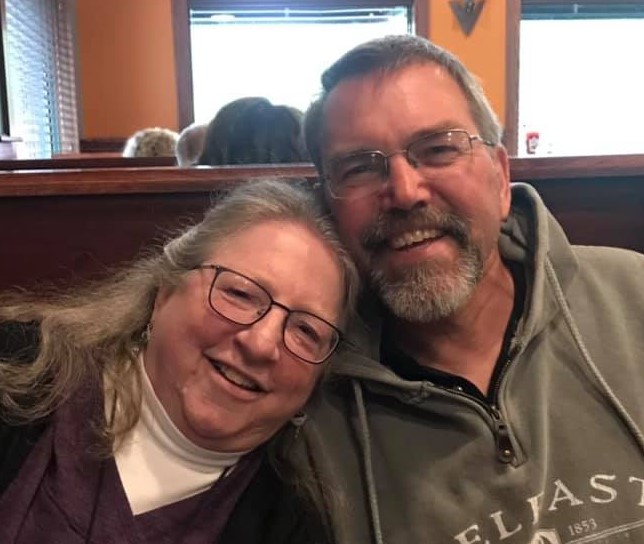
Where did all the time go? My hair is now about shoulder length with too much grey to be able to call them highlights. Joel is starting to get his Claus beard. We’ve done a lot of living in these years, explored the wonders of Maine from the ocean to the mountains to the coastal and farm towns. We invested our whole hearts in our congregation, celebrated baptisms, weddings, and way too many funerals. Made good friends. Surprisingly, I do not think I’ve picked up the distinctive Maine accent, though I do enjoy hearing a good one in the conversation of the old-timers. But those old-timers seem to now live in me – I look just like them!

Though somewhat shocked by my appearance in the glass door, I am not sorry that I am looking older. Not surprisingly, as I navigate the mid-sixties, I am becoming more and more interested in what it means to get old. To be old, yet fully alive and still growing.

In my graduate school years, I did much of my work studying human development. I was especially interested in work that sprang from Jean Piaget’s discoveries in cognitive development, particularly James Fowler’s stages of faith development. Then, in my twenties and thirties, I was fairly satisfied with Fowler’s take on how faith grows and changes over the early human lifespan. Now, however, I am more convinced of what I only suspected then, that later in life there is something that either goes beyond or deepens his final “Universalizing” stage. And I think it has something to do with our human opportunity to heal the dark night of the soul this world is suffering.

I may be retired from active congregational ministry, but as I see myself in the glass door, I know I am not finished with doing my part to heal ths earth and its creatures. And that I have more to offer.

Is Our Angel Coming?

Rev. Dr. Kate Winters

Years ago someone shared with me an Easter sermon that made a big impression on her. The preacher had been in a deep depression for months and when the day came for the trumpets to sound and joyful expressions of “Alleluia!,” all he could do was stand behind the pulpit and say “I have to be honest. I am still in the deep and dark tomb…but I know my angel is coming!” And he sat down.

This was as powerful an Easter proclamation as I have ever heard, an expression of deep faith born of having lived the resurrection story. From darkness, surely shall spring the light. But I have to admit, I was a bit relieved not to have to preach this Easter Sunday. Not because of any personal depression, but how would I offer a message of hope to a world that seems to be stuck in the dark? Would my “Alleluia! Christ is Risen!” sound authentic when we are circled by death all around?

Mass shootings have become almost a daily occurrence in schools, places of employment, houses of worship, in the city and country streets. Faces of the victims haunt me. The war in Ukraine is a slaughterhouse, as well as the deep famine threatening whole populations in Africa. The global climate crisis is showing up in real time in many ways. Just this week I was in northern Maine. I asked a shop owner about the health of the moose population. She looked grieved as she told me that it is hardly what it used to be. The warmer temperatures have caused numbers of ticks to explode. They suck the blood right out of the young calves killing them in the process. These majestic animals that gave Joel and me so much joy when we first moved here in the not so distant past are now in danger. I am sure that every region has its own canary in the coal mine. Perhaps many.

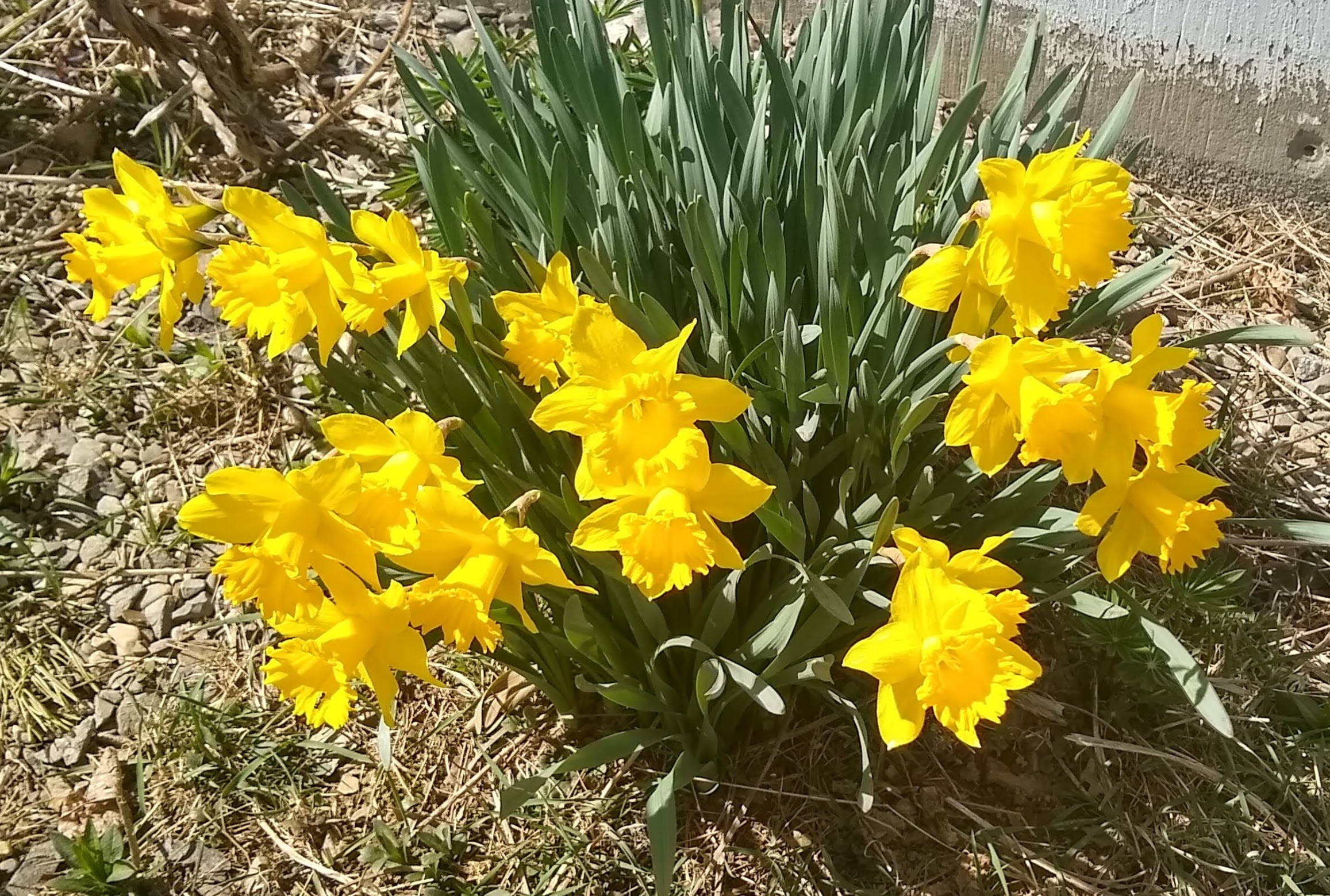
So on this Easter week, how does one proclaim with conviction that new life springs from death? That the tomb is empty? At least in a way that does not contradict one’s own experience? For me, deep theological truths are based in enfleshed experience. Yes, the daffodils are blooming, and yes the sun is warming, but how is this addressing gun proliferation, growing hatred, white supremacy, anti-semitism, heterosexism, all the isms of our time. Does Christianity and its faith experience have anything to say to our world today? Does religion writ large have any answers for us? Does it offer a path out of the darkness that we are in? Can we still say “our angel is coming?”

I hope to say more, but until then, let us seek signs of hope and life around and within us. We certainly need to share them with one another.

The Profound Truth of Holy Saturday

Rev. Dr. Kate Winters

I stepped out onto the deck just before four this morning to a deep and blessed silence. The traffic we often hear from the nearby highway had not yet begun. Not a single bird was singing, though I knew it wouldn’t be long. The sky held a just-beyond-full moon, with a smattering of stars. Nothing was moving. Yesterday’s winds had died. It felt like a vacuum.

I waited and I listened. Then I remembered. It is Holy Saturday. The day in between. A day of true liminality, filling the space between life and death. Or in this case, death and life. For me, it is a most mysterious day of the Christian year. The tomb is not empty. What do we do with that?

Honestly, I think that we who have followed and planned for the liturgical year have missed the boat on this one. Putting all our energy into a stirring Palm Sunday, a rich Maundy Thursday, an often excruciating Good Friday, and a trimphant Easter Sunday, Saturday has often gone by unnoted and unnoticed.

I can almost hear my clergy colleagues moan – “What does she want us to do, another over the top liturgy to plan and execute?” Isn’t there enough exhaustion at the end of these days? My baby sister who is married to an Episcopal priest calls this time “Holy Hell Week,” and though some may be scandalized, most of us understand. As I wrote on Thursday, we are moving through the rapids with little down time to float.

So, how have we missed the boat on this day? We have missed honoring the profound truths of the tomb on Holy Saturday. That death is real and a part of the Christian, the human, story. That silence is not to be avoided. That the deep and the dark can be the most fertile place for our our spirits to grow. That a rising not only takes a dying, but a resting in the unknown. The tomb involves the ultimate letting go, there is nothing more to do, but there is still a power that can be working on our transformation. But to get there, everything that is familiar to us must die. All that we love needs to be let go. The tomb is the cold, hard reality that all of us must enter before having any glimpse of new light.

I have spent a good deal of my life running away from various tombs, various endings, never realizing that they were invitations to deep rest, silence, and transformation. The three months of silence that I was planning for in retirement before my health issues appeared may have been an attempt to reverse this – to run toward the silent and tansforming tomb instead of away. But perhaps it is the job of life to take us to them, our job to receive when our time is at hand.

This year, I will practice Holy Saturday as a day for receiving the dark mysterious and unknown. Perhaps I will take a walk in Grove Cemetary in communion with all the spirits I have loved there. I will try not to run away from the death that feeds so much of life. For indeed, we do have a God of both.

Out of the Rapids, Into the Depths

Rev. Dr. Kate Winters

It is Thursday of Holy Week, in the middle of what I used to call the “rapids” or the “whitewater” of the river of time that is the Christian liturgical year. It has always been a bumpy ride from the ecstatic jubilation of Palm Sunday, to the astounding power of sharing a simple table with one’s community on this day, to the utter desolation and grief on Friday, to gathering to prepare the setting for an open grave on Saturday, to the flowers and trumpets of Easter Sunday. For over thirty years, my job was to guide the craft through the thrilling and dangerous waters.

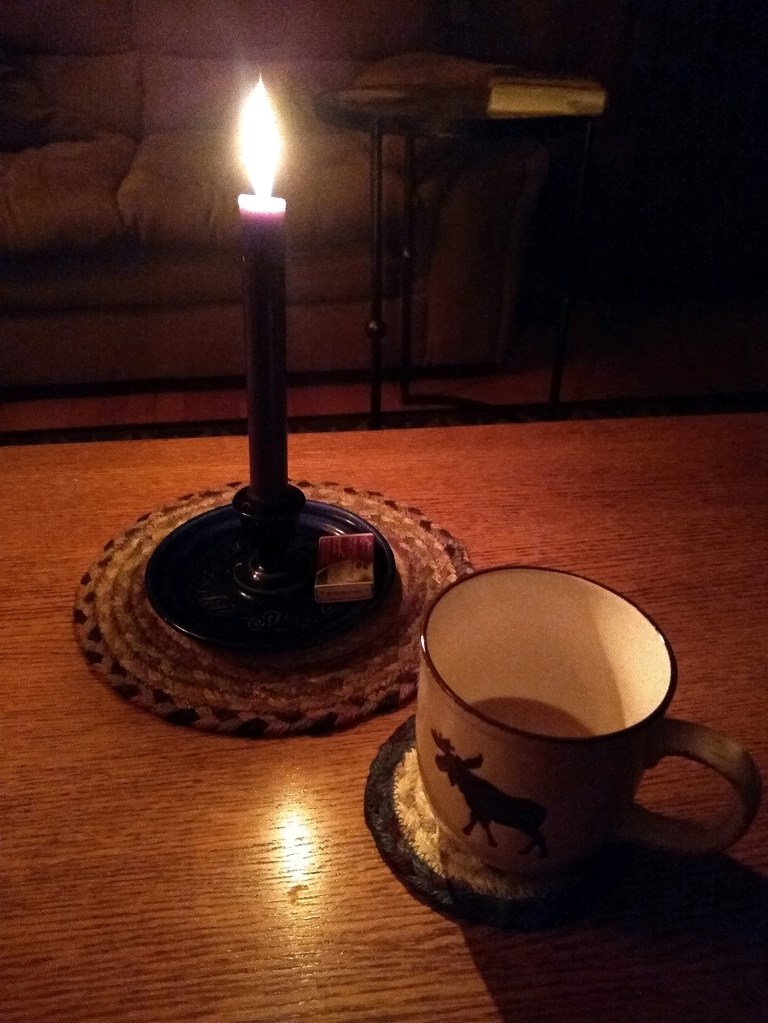
Here now I sit with my candle, coffee, and journal, a different kind of Holy Week. More reflective than roiling, thinking of Maundy Thursdays past. It was this day’s celebration that called me to be ordained in the church at all. My desire was not really to preach or to lead a congregation, but I longed to have the privilege and the joy of gathering the beloveds around the common table to experience the presence of God – in the bread and the wine, the elements of earth, and in one another. I wanted to be able to look the gathered straight into the eyes and reflect back their goodness as Jesus willed to do in his life. I desired to do my part in weaving together the tender and beautiful body of Christ as we celebrated in true communion. It is this whole body that is the sacrament – the miraculous life of God in the ordinary.

Even in retirement, I retain this calling. This blog, Dwelling in Presence, is my attempt at finding and naming the sacred in all aspects of our lives. In our joys, disapppointments, in our pain, fears, even in our physicality. As at the table on Maundy Thursday, brokenness is blessed. Feet are washed. Wounds are healed. The goodness of God is tasted. Life and death, joy and grief, loom together in one dance. In it all, Christ is present.

And, of course, the mandate (the origin of the word “Maundy”) is received. “Love one another as I have loved you.” What better sign of the sacred in the world, how clear a sacrament, is a community rooted and growing in love. The love that can’t help itself from reaching out, spreading, as it dwells and moves as God’s presence in the world. I may not be taken up by the whitewater today, but I am feeling pulled down into the depths of what this week, this faith, is all about.

Disorientation

Rev. Dr. Kate Winters

Fragments of bad dreams swirl in my head as I get up today, taunting my usually joyful morning spirit. It was a busy night, so many of my personal fears and flaws dancing before me. I am walking down Avenue L in Canarsie (the section of Brooklyn where I grew up) in a fierce storm. I call my mother to come and get me, but she refuses. Then I am in an office workplace, totally incapable of completing the simplest task, and no one will explain anything to me. Finally, I am abandoned by someone who was my friend as she goes off with someone else while nothing looks familiar around me. I am totally lost.

Upon waking I am filled with unsettled feelings – disorientation, loss, most certainly abandonment. I realize this is a new phase of my retirement. The novelty and celebration of it is over. Some wounds need to be tended to.

It is a common practice in many church denominations including my own for the pastor to fully leave their faith community upon retirement to prepare the congregation to accept and embrace the new pastor. So after nearly two decades of pouring our hearts and souls into our church, Joel and I need to find another place for all that love to go. What is it said about grief – that all it is is love with no place to go? The grief of this time is enormous and disorienting.

It would not be appropriate for me to question the wisdom of this denominational practice now except to say that I would welcome the opportunity to support the new pastor of the community I have loved. And if that means bearing this grief, then that’s what it means. I do wish there was a better and gentler way.

In the meantime, I know my calling – to keep loving. Perhaps if I didn’t have a major surgery in a few weeks, I would be seeking new ways to reach out to the Belfast community. My dreams could then be less about disorientation and more about new connections. We both will need to reorient ourselves to this place as we own a home here.

But honestly, it is already beginning. The wildlife on our land have surrounded us with welcome. Deer, turkey, various birds, even a few squirrels have worked at being entertaining. I am still waiting for the moose in the backyard. The daffodils and tulips are inching out of the ground. Finally the piles of snow have melted off the back deck and I am free to go outside to listen for the barred owl in the woods. When she calls, I know my grief will be lifted and I will be home.

Receiving the Day

Rev. Dr. Kate Winters

The sky is filled with brilliant stars this morning. The coffee in my mug is hot and strong. I have a whole day open ahead of me with nothing on my calendar. This is my favorite kind of morning. Open space, nothing planned. A day to simply receive – not to make happen.

Is it possible to still do that in adulthood? Receive the day? After all, isn’t each day a gift, something we’ve done absolutely nothing to deserve? All I need to do is breathe, and I don’t even need to be conscious of it! My body has the wisdom to act on its own behalf. It totally cooperates in the process.

The sun has just risen over the horizon. In other words, the earth has spun into place for sunrise viewing. They needed nothing from me, except perhaps for my attention. No, they don’t even need that, but it is me who benefits. The golden orb matches the flame on my candle. Perhaps I will let it burn all the way down and enjoy an extended dawn.

Today the first bird I hear through the closed window (it is 20 degrees outside) is the crazed gobble of a turkey. Without looking, I can imagine his feathers fully flared out as he struts before the hens. They seem to vocalize when they’re in the mood for love. And the hens just ignore them! It makes me laugh every time. Spring must be exhausting for these toms. But then, they don’t have to go running after the babies all summer!

I hear my beloved husband stirring in the bedroom. Now I have to make a decision. Do I rise, go in there, and demand my fifteen minutes of cuddling? Or do I let him join me first and kiss me as he always does? I am so blessed. I let the kiss come to me. After all, I have decided to receive the day. All day. So far, its magic.

Season of Waiting

Rev. Dr. Kate Winters

My visit with the surgeon went well yesterday. I felt I was in good, competent, and compassionate hands. The next day I received a call from his office and a date – April 21st. Just a little over three weeks from today. So I begin a short season of waiting.

Now, I should be good at this. My favorite season of the church liturgical year is Advent, the approximately four weeks before the celebration of Christmas. It is essentially a season of waiting. The scriptures are all about how something is coming, something big is happening. Not just the birth of a baby, but the breaking of God into the world in a most spectacular way. There will be signs and wonders, anxiety and fear. Most of all, there will be preparation and waiting.

Advent is a season of watchful anticipation. We even have a beautiful ritual to mark the time, a wreath of four candles, each signifying a theme as we wait for the climactic event – hope, peace, joy, and love. We light them and nurture within ourselves and each other the meaning of the light that is growing with every passing week. In this way we prepare ourselves for incarnation, God becoming flesh in the child Jesus and in us.

Okay, okay, bypass surgery is not exactly Christmas. But it is likely (I hope) the most climactic event that my body will experience this year. And I know it is coming. I am both afraid and hopeful. So how to wait in these days?

This morning, I sought out one of my spiritual mentors, the late Father Henri Nouwen. Perhaps in a future post I will relay my Henri story, but suffice it to say that when I first read him in high school, I declared I wanted to be the female Henri Nouwen when I grew up, so I followed him to Yale Divinity School. I guess I was a spiritually ambitious child! In any case, when I am struggling, Henri always grounds me.

In a book of Advent reflections entitled Watch for the Light, Henri wrote:

“A waiting person is a patient person. The word patience means the willingness to stay where we are and live the situation to the full in the belief that something hidden will manifest itself to us. Impatient people are always expecting the real thing to happen somewhere else and therefore want to go elsewhere. The moment is empty. But patient people stay where they are. Patient living means to live actively in the present and wait there. Waiting, then, is not passive. It involves nurturing the moment, as a mother nurtures the child that is growing in her. Zechariah, Elizabeth, and Mary were present to the moment. That is why they could hear the angel. They were alert, attentive to the voice that spoke to them and said, “Don’t be afraid. Something is happening to you. Pay attention.’ (p. 32)

I am not having a child, but something indeed is happening to me. Believing as I do that everry moment is filled with the presence of God, I must wait, be fully awake, in this moment and not run away or distract myself out of fear. Even in this, I am being called to listen for the angel that is urging me to growth, to change, to incarnation in a totally unexpected way.

So, how do I wait? With patience, in an active dialogue with the One who is calling me out of my exhaustion to have life, life to the full. This is what I am hearing.

A Visit to the Surgeon

Rev. Dr. Kate Winters

Joel and I are finally going to meet the heart surgeon today. Hopefully by the end of the visit, I will have a date for my triple bypass surgery. I do know that I will finally have all the gory details of the operation. This, I think, is good. I have a strong tendency to immediately make some kind of meaning out of things before facing the physical reality of them.

For example, one of my first posts dealt with how this surgery would reroute the meaning and activity of my retirement – from a plan to keep three months of silence to having a lesson in letting go and surrender. I had already set up a spiritual goal for the surgery before acknowledging the fact that my sternum was going to be broken, my chest entered, veins removed from God knows where to replace or assist the blocked ones. My heart will be stopped for some time and I will be put on a bypass machine that will keep me alive while new pathways are created for blood to feed my heart. Yes, I’ve been reading, which is another way I deal with the frightening unknown. Although I’d much rather deal with the spiritual meaning than the physical reality of what will happen to me. However, is this not a miracle, the fact that the heart can be stopped, worked on, then started again to heal a human body?

Okay, there is that little doubt…what if it refuses? What if my heart decides, “Thank you very much, but I am tired and would like to enjoy this sleep?” How might I ask the surgeon this question? But really, isn’t this God’s domain? Will this not be a “thin place” where life meets death, where the skill of the human surgeon meets the life-giving will of God?

I have heard that heart patients tend to get more emotional after this kind of surgery. They feel things more deeply and cry more easily. Is there something about entering that liminal place between life and death that deepens our emotional connections with all other beings, our sensitivity to the fragility of life on this earth? There I go again, into the realm of the Spirit rather than acknowledging that there will be pain and pain fosters tears. On the other hand, haven’t I been learning that the realm of the Spirit and the realm of the body are completlely intertwined?

So, today I will meet the surgeon, Dr. Buchanan, the man who will literally hold my life in his hands. Yes, I have some fear, but mostly I am grateful that I have this opporunity to have my life extended, a life full of joy, of love, and of meaning. I pray that I am open to all the lessons of this time, both spiritual and physical. And that Joel can put up with an even more emotional me!

Sunday Morning

Rev. Dr. Kate Winters

It is Sunday morning. For years this meant that I would be sitting at my desk editing a gospel message and constructing the script that Joel and I would share for the service we did together. Not everything was scripted, but enough that the two of us would know where we were and where we were going. Usually. Once in a while, we would get lost in a prayer, or in the blessed babbling of a baby, or a thunderclap outside, and the Spirit would have her say! The best parts of a church service are always the surprises. That and the loving community of people who gather to pray together.

One of my favorite moments happened on the Sunday following the 9/11 attacks when I wanted so much to give the people a way to express both their grief and their hope. I had decided to give the children a job for their message – to go out and use the sidewalk chalk I had bought them to cover the sidewalks of the little downtown of Osseo, Wisconsin, with messages of love. When the people would walk around with their heads bowed in sorrow, they would see their messages and smile. When I opened the bag to distribute the chalk, I realized that I had purchased “Sidewalk Chalk Bubblegum!” A little boy with a big high pitched voice said at the top of his lungs “Pastor Kate, you really ought to read the labels!” The whole congregation erupted in healing laughter. It was exactly the blessing we all needed.

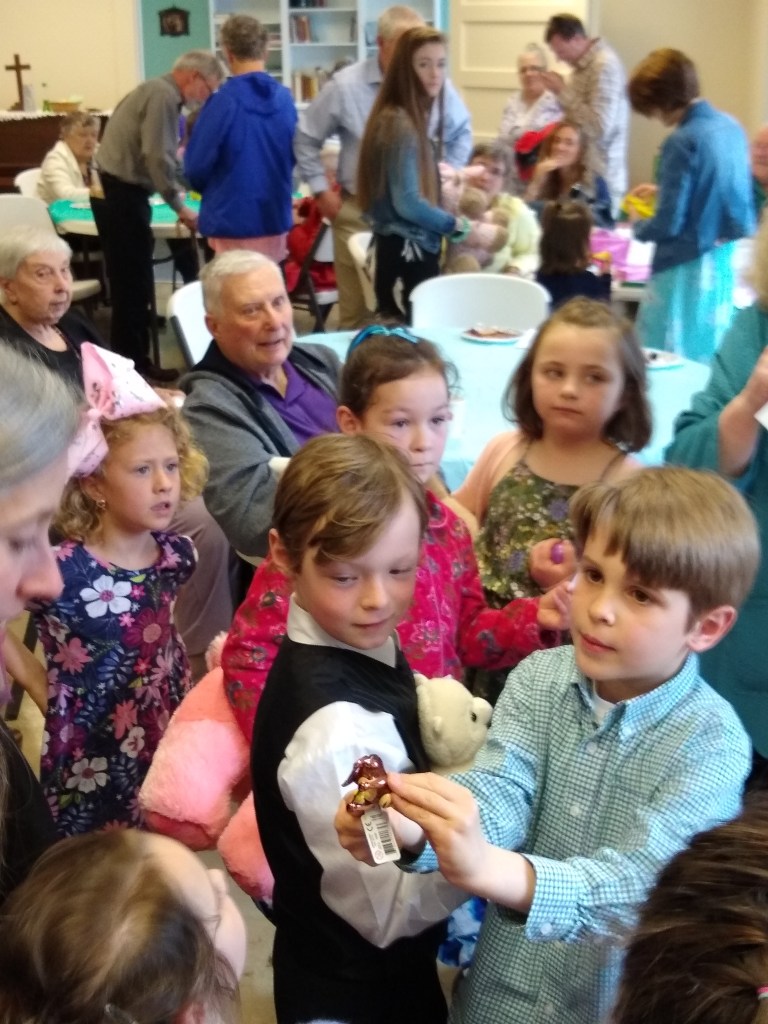
I never understood those who chose not to have a time for children during the service as it felt like they were only putting the children on display. Yes, they could be cute and funny, but this was also their time to minister to the whole congregation in a way only they could. Whether they were handing out palms, collecting soup for the food cupboard, sitting with their arms around their siblings, or reminding their pastor to pay attention to what she was buying, they displayed God’s spirit in a most unguarded way. The babies who escaped and crawled down the center aisle or up toward the pulpit taught the people that God’s space was meant to be explored, touched, even tasted. The little one who came up to communion with his mother only to get a blessing, and then screamed the whole way back to his seat “I WANT SOME!” converted a whole church to children’s communion. Children do ministry.

It is Sunday morning, a little more than two months into our retirement. I miss our church community. I do not miss acting as their pastor, but I miss being amazed, taught, and loved by them. Especially the children.

The First Image

Rev. Dr. Kate Winters

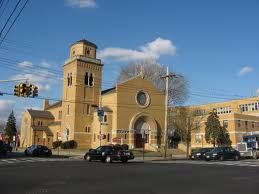
I’ve had many images and understandings of God in my lifetime. Like many, I began with the stereotypical ancient man in the clouds. I remember the day he came alive for me. I was about six when Sister Joseph at Holy Family School asked me to give a little welcoming speech for the bishop who was coming to bless a new wing of the building. Now, I did not know what a bishop was, but I knew something big was happening as the nuns were all aflutter for weeks before the event.

The day of the celebration came and despite all the Blessed Mother statues displayed in the windows of the convent to assure good weather, the rain came down harder than I ever remembered, then or since. The few young priests were running around in bathing suits bailing out the school basement, proving that they did have bodies under those vestments. A bit scandalous.

I was prepared at home, dressed in a baby blue fluffy gown embroidered with daisies and a little daisy crown placed on my very blond head, white patent leather shoes and white gloves completing the outfit. When we got to the school, my father scooped me in his arms to carry me up the many stairs to the main entrance as the rain poured down. He put me down in the lobby that was abuzz with school faculty, news reporters, and parish priests in more appropriate attire.

At the appointed time, a space was cleared and I was placed in the middle of it. Then the principal’s door opened. Out stepped a very tall magisterial figure dressed in a gold and white robe, a golden mitre on top of his head, with staff in hand. I remember the moment clearly. I took a startled step back and whispered “It’s God…”

I must have been put on remote control. “Your excellency, we here at Holy Family School are so pleased that you have honored us by coming…” That’s all I remember. That and the flashing of light bulbs as I was directed numerous times to kiss the ring on God’s finger as the soaked cameras failed.

At the time, I was taught that kissing this ring offered an “indulgence,” a certain number of days or years off your time in purgatory for atonement of your sins. I’m sure I’ve used up my allotment by now, if only for the fact that after much work and stuggle, I finally smashed that particular image of God. Many have since replaced it.

For the last few years, I have preached about God as the great broken-open heart of the cosmos. I’m curious to find what my upcoming heart bypass surgery will teach me about that. I’ve learned that the body has wisdom the mind only catches up with later.